Showing posts with label hindi singers. Show all posts

Friday, January 11, 2008

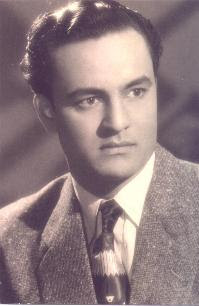
Mukesh - the passionate singer of the last century


Mukesh – The passionate singer of the last Century.

Mukesh
The 40s, 50s, 60s and 70s are categorised as the golden age of bollywood music and all the playback singers had made notable contribution for the success of the films made during that period. Mukesh had a sweet voice and his songs made notable contribution in most of the films of Raj Kapoor.

In the early 50s his songs in the film Awara, like “awara hoon,” “dum bhar jo udhar mu phere” were big hits. He had sung his major songs under the composition of Shankar Jaikishan as they had composed the maximum number of songs for Raj Kapoor. His other notable songs include “aja re”, “sub kuch sikha humne”, “ kisiki muskurahato pe ho nisar”, “ ai sanam jisne tujhe chand sa sura di hai”, etc. Salil Chowdhury also had liking for Mukesh. His songs include “dil tarap tarap ke kah raha hai aa bhi ja”, “ suhana safar” from Madhumati, 1958, “ kahi door jab din dhal jaye”, “maine tere liye hi saat rang ke”, etc., from Anand, 1970.

Mukesh
Other than singing in films of Raj Kapoor, Mukesh always made significant contribution in songs related to pathos, which were sung for different actors. Songs like “yeh mera diwanapan”, for Dilip Kumar, “sawan ka mahina”, for Sunil Dutt, “ taoba yeh matwali chal” for Manoj Kumar, etc., had a lasting impact even after 40 years of their creation. May be the passionate andaz of Mukesh use to touch the hearts of the listeners, and that was one of the reasons inspite of having nomajor classical background Mukesh’s songs ended up being major hits.
Mukesh
There was lot of truth in his voice and his singing which persuaded many composers and lyricists to compose songs for him. Songs like “chandan sa badan”, composed by Kalyanji Anandji,” “saranga teri yaad me”, composed by Sardar Mullick, “ aansoo bhari hai” composed by Dattaram, “bhuli hui yaaden” composed by Madan Mohan had the identity of being typical songs composed for Mukesh, where his realisation of the words and tragic spirit had helped him to do justice to the landmark creations. His other songs for Raj Kapoor include “ mera naam raju”, “ aa ab laut chale”, “ har dil jo pyar karega”, “duniya banana wale”, “ chalia mera naam”, “chale jana”, etc.

Mukesh also had made major contribution to filsm like Saathi, where for a change Rajender Kumar had given lips for his songs which were composed by Naushad. Khayyam’s soft tunes were given right expression by Mukesh in the film Kabhi Kabhi, 1975, in songs like “kabhi kabhi”, “mai pal do pal ka shayar hoon’, etc.

Mukesh
It is very difficult to highlight the contribution of the singing legend in a small article who had made major contribution to bollywood films for over 30 years. But there is no doubt that bollywood music would have remained incomplete without the contribution of Mukesh, which had galvanised the golden age of music along with major contributions from Mohammad Rafi, Kishore Kumar, Manna Dey, Talat Mehmood, Lata, Asha and others.

Wednesday, December 19, 2007

Did Rafi face any competition in bollywood films?

Did Rafi at all face any competition in the golden age of bollywood films?


Whenever the golden age of Indian films are revisited, one of the most notable personalities, Mohammad Rafi, comes into our mind automatically. Much had been written about the maestro and yet not everything has been written. If Rafi had sung around 26,000 songs within a span of 35 years, then the obvious question hovers in the mind of music lovers is that did Rafi at all face any competition during the golden age.


Before answering the question, the other singing personalities should be referred, among female singers Lata Mangeshkar, Samshad Begum, Geeta Dutt, Asha Bhosle, Suman Kalyanpur, Sudha Malhotra, were the dominating figures, while Manna Dey, Mukesh, Talat Mehmood, Kishore Kumar, Hemant Kumar, Mahendra Kapoor, were the male singers contributing to playback singing in Indian films. Mukesh mainly contributed to films of Raj Kapoor and Manoj Kumar, although he had sung hit songs for Dilip Kumar, Sunil Dutt, specially when they were composed by Shankar Jaikishan or Salil Chowdhury. Talat Mehmood was mainly associated with Dilip Kumar, Hemant Kumar and Kishore Kumar were associated with Dev Anand, Manna Dey was associated with Raj Kapoor, Mahendra Kapoor contributed to Manoj Kumar’s films and BR Chopra’s films.

In respect of female singers Shamshad Begum faded away in the 60s and Geeta Dutt, after the death of Guru Dutt, did not make major contribution to Indian films. Asha Bhosle initially was associated with compositions of OP Nayyar and Ravi, but sang under most of the big banners from the 70s. That leaves us with the nightingale of India that is Lata Mangeshkar. If Rafi had faced true competition from any singer then it was Lata all the way. The statistics of around 440 duets being sung by Rafi and Lata, provides the picture that the film industry was equally dependant on Lata Mangeshkar as they were dependant on Mohammad Rafi.


Very significantly those composers who were obsessed about Rafi, the same composers had liking for Lata. Shankar Jaikishan had provided immortal duet songs for Rafi and Lata and Asha like “itna hai tujhse pyar mujhe”, “ kaise samjhayun bari nasamajh ho” in the film Suraj, in 1966. Naushad’s composition “do sitaron ka zamee par hai milan aaj ki raat” for Rafi and Lata, in the film Kohinoor, in 1960, bolsters his liking towards both the singers. Roshan had experimented with the title song in Barsaat ki raat, in 1960, with both Rafi and Lata. He also asked Rafi and Lata to sing the song “dil jo na keh saka” in the film Bheegi Raat, in 1965, separately at different times in the same film. Laxmikant Pyarellal had composed the duet song of Rafi and Lata titled “woh jab yaad aye bahut yaad aye” from the film Parasmani, in 1963.

Besides Kalyanji Anandji, composed the song “akele hai chale ayo” for both Rafi and Lata who had sung it at different times in the film Raaz in 1968. Besides if Madan Mohan had tremendous liking for Rafi with songs like “tum jo mil gaye ho”, “tumhari zulfoke saye me sham karlunga”, he had equal love for Lata with songs like “tu jaha jaha chalega”, “zarahsi aahat hoti hai”, etc. Besides he composed the same song “teri aankho ke siva duniya me rakha kya hai” for both Rafi and Lata in the film Chirag, 1968. Ghulam Mohammad had provided immortal duet for Rafi and Lata titled “chalo dildar chalo” in the film Pakiza in 1971.

Excepting mid-70s, when Kishore Kumar had sung for leading actors like Amitabh Bachhan, Vinod Mehra, etc., Rafi never faced any competition from any male contemporary singers. Even in that age, Rafi was preferred by those composers like Madan Mohan, Naushad, who had classical affiliation and never compromised with class. Manna Dey faced Rafi in musical competitions with his versatile classical orientation in songs like “yeh isq isq”, from the film Barsaat ki raat, composed by Roshan. The debate relating to Rafi’s competitors can go on, and some of the music lovers highlight the song in Amar Akbar Anthony, in 1977, “humko tumse ho gaya hai pyar”, where Rafi sung for Rishi Kapoor, Kishore Kumar for Amitabh Bacchan and Mukesh sung for Vinod Khanna, to emphasis the fact of equal popularity of Mukesh and Kishore Kumar with Rafi. But if the interviews of leading composers, lyricists, producers and directors are studied, there is no second opinion that Rafi was given separate consideration and given added honour without disrespecting any of the other singers who also had made significant contribution to the world of playback singing in bollywood films.


Related Reading


Saturday, December 15, 2007

Sonu Nigam - the dynamic singer of bollywood

Sonu Nigam – the most dynamic singer of Bollywood.


When Mohammad Rafi died in 1980, a number of producers in bollywood were concerned about the fate of playback singing with respect to those stars like Dilip Kumar or Shammi Kapoor, who were indebted with Rafi’s voice. A number of playback singers Shabbir Kumar, Anwar, Mohammad Aziz, who used Rafi’s singing style tried to fill up the vacuum created by his untimely death, but the audience could not forget Rafi and the search for singers having similar amount of sweetness of voice never ended.

Sonu Nigam, born on 30th July, 1973, gained the attention of music lovers across the country with his popular music competition TVS Saregama featured in the Television which viewers in India and abroad enjoyed for a long period of time. He brought legendary composers like Naushad, OP Nayyar, Khayyam, etc., to the program and gained respectability in the minds of musical experts. At the age of 3 years, he joined his father Agar Kumar Nigam on stage in singing Rafi’s song “kya hua tera wada”. He learnt music from Ustad Maha Kanjar Naveed. He sang a number of Rafi’s songs in T Series and his song “accha sila diya tune mere pyar ka” familiarised his voice with the Indian audience.

He made the youth of the country spellbound with westernised tunes and romantic presentation in his private album titled Diwana. His prominent songs include “kuch tum socho, kuch hum soche”, “diwana, mai hu diwana tera”, etc. Slowly all the leading composers in bollywood showed faith in Sonum Nigam and he became a phenomenon. Gradually his other albums “Jaan”, “Yaad”, “Chandan ki doli”,

His songs in JP Dutta’s film Border and Refugee, composed by Anu Malik touched the minds of young and old, all sections of the society. Significantly, the lyrics written by Javed Akhtar were also meaningful. Popular songs include “mere humsafar, mere humsafar”, “panchi nadiya”, “hume jab se mohabbat ho gaya hai”, “sandese ate hai”, etc. His songs in the film Pardes, titled “yeh dil diwana”, song titled “satrangi re” from the film Dil Se, also attracted the attention of music lovers.

With providing hits one after the other he caught the attention of composer AR Rehman and made his presence felt in the minds of music lovers with songs “sathiya sathiya” from the film Saathiya, which not only gave him fame but also provided him the filmfare award for the best singer in 2002. He had inherent classical touch in his voice which wa well exploited by AR Rehman. His songs in the film Kabhi Khushi Kabhi Gum, titled “suraj hua madhyam”, film Mujhe Kuch Kehna Hai titled “is pyar ko” entertained the audience. Just like Rafi, Sonu Nigam, provides very strong expression in the songs and by this period of time had evolved his own style of singing.

In 2003, Sonu Nigam again won the filmfare award for the best singer with the song “kal ho na ho” in the film Kal Ho Na Ho. He also won the national film award for singing in the same film. In recent years his television program Indian idol, which was based on musical competition, where he participated as one of the judges along with Anu Malik and Farah Khan had mesmerised viewers across India and abroad. In his statements towards young singers, he strongly expresses his respect for Mohammad Rafi, once he said to one of the participants “mera gana gana tumhare bus me hai, Rafisahab ka gana gaan tumhare bus se bahar hai”.

He also acted in a number of films and participated in programs organised on All India Radio. In the last few years his songs in most of the successful films of bollywood are memorised by the youth and many upcoming singers consider him as role model. His successful songs in the recent years include “pal pal” from Lage Raho Munna Bhai, “humko maloom hai” from Jan-e-Mann, “kabhi alvida na kehna” from Kabhi Alvida Na Kehna, “piyu bole” from Parineeta, “Salaam-e-ishq” from Salaam-e-ishq, etc. Even in the middle of strong competition from different types of singers in bollywood, Sonu nigam has created a style of his own and is scheduled to make major contribution for bollywood films in years to come. The songs from his successful films should be restored for new singers who are interested to use the classical skills taught by major gurujis in India in both eastern and western songs.

Thursday, December 13, 2007

Raj Kumar - The Stylish Actor of Bollywood

Raj Kumar – the stylish actor of Bollywood.


Raj Kumar can be considered as one of the most stylist actors of bollywood whose style of stretching the dialogues with a unique manner of expression entertained the film lovers for the last 50 years. Born on 8th October, 1926, his original name was Kulbhushan Pandit, but he gained popularity in Indian silver screen with the name of Raj Kumar. He started his career with the film Merry Women, in 1952, but got recognition after acting in an epic role opposite Nargis in Mehboob Khan’s cine-classic Mother India in 1957. Although it was a female oriented movie with Nargis showing the struggle of a widow in a peasant family in rural India who had faced the crude realities of life after Raj Kumar died in bringing up her two sons Sunil Dutt and Rajender Kumar, Raj Kumar kept his mark in the initial part of the film.

Raj Kumar started getting prominent roles in the 60s with the success of the film Dil Apna Aur Preet Parayi in 1960 opposite Meena Kumari and Nadira. He was sublime in the performance relating to complexity of emotions in the films as he had to balance the duties towards his wife Nadira in spite of having weakness towards the nurse played by Meena Kumari. Raj Kumar also acted with his personality in the film Dil Ek Mandir, 1963, where he played the role of the sick husband of Meena Kumari and was treated successfully by the doctor played by Rajender Kumar who died at the end of the film. The songs composed by Shankar Jaikishan in both these films became evergreen hits.


In mid-60s Raj Kumar displayed a new style of performance in the film Kajal, 1965, where the song sequences with his role of a drunkard appealed to the masses. The songs “chulene do nazuk hoton ko”, “yeh zulf agar khulke bikhar jaye to accha ho”, composed by Ravi and sung with a sombre expression of Mohammad Rafi had astonished the viewers. At that time Raj Kumar appeared in multi-starrer films of BR Chopra including Waqt, 1965, along with Sunil Dutt, Shashi Kapoor and Humraaz, 1967, along with Sunil Dutt. He acted in a unique role in Neel Kamal opposite Wahida Rehman and Manoj Kumar, where he used to appear in the dreams of Wahida Rehman and reflected a past relationship. Ravi’s composition and Rafi’s song “tujhko pukare tera pyar” became super duper hit at that period. He was well appreciated in the film Heer Ranjha, opposite Priya Rajwangsh and the songs of Rafi and Lata including “yeh duniya yeh mehfil” composed by Madan Mohan became everlasting hit.

Raj Kumar also performed well in historical roles like Lal Patthar in 1971 which was the hindi adaptation of Bengali Superstar Uttam Kumar’s film Lal Pathor made in 1964. the royal nature of lifestyle of the badshahs residing near Agra was displayed with style by Raj Kumar. He also complimented Meena Kumari in Kamal Humrohi’s musical blockbuster Pakiza, 1971. His dialogue “yeh paer bari haseen hai, ise zameen par mat phekna, maile ho jaenge” was memorised by numerous film lovers in India and abroad. Ghulam Mohammad was excellent with his use of the dholak and the duet song Rafi and Lata titled “chalo dildar chalo” picturised on Raj Kumar and Meena Kumari symbolised majestic romance.

After performing in other significant roles in films like Maryada, 1971, Raj Kumar shifted to action films in the 80s and 90s. In the 80s his film Bulandi stormed the silver screen, where he played the role of a Professor and used the students of his institutions to raise their voice against corrupt businessmen operating in the society. The dialogues in the film including “humko mita sake zamane me dum nahi, humse khud hai zamana, zamane se hum nahi” almost reciprocated his personality.

He continued to perform in big productions including Subhas Ghai’s Saudagar, in early 90s opposite Dilip Kumar and Tiranga opposite Nana Patekar. In Saudagar, he did maintain his family heritage which confronted with Dilip Kumar’s set of values and the audience enjoyed their clash of personality and witty postures. With his death in the mid-90s, the generation of stylist actors faded away.

His son Puru Raj Kumar, is sometimes seen performing with stylish endeavour in films like Mission Kashmir, opposite Sanjay Dutt, but he gets mainly characters resembling anti-heroes. Raj kumar’s films should be restored to update the present generation with the blend of personality with style and depth of performance which Raj Kumar had displayed for the last 50 years.

Wednesday, December 12, 2007

Sadhna - The romantic actress of Bollywood

Sadhna’s contribution to Indian films:


Amongst the established actresses of the 50s and 60s, Sadhna graced the silver screen with her remote style of soft performance and made a significant impact in the golden era of Indian films. Sadhna made her debue in the film Love in Shimla, in 1959, opposite Joy Mukherjee. She made a haircut and created a distinct identity and the new generation started following her style with Sadhna cut. She amazed the film lovers with her serene performance in Raj Khosla’s Ek Musafir Ek Haseena, 1962, opposite Joy Mukherjee. It was a black and white classic but scenes were shot at picturesque locations in Jammu and Kashmir. OP Nayyar made as many musical experiments in the film as possible.

Sadhna made the musical sequences of the song “aap yu hi agar humse milte rahe” sung by Asha and Rafi immortal, by making postures in a manner by which a peacock welcomes the monsoon. The other songs in the film titled “bahut shukriya, bari meherbani” sung by Asha and Rafi, also impressed the filmlovers. After acting in Asli Nakli, opposite Dev Anand and Dulha Dulhan opposite Raj Kapoor, Sadhna addressed the purdanashin community of Aligarh, Lucknow and the middle-east countries with her dynamic performance in the film Mere Mehboob, opposite Rajender Kumar in 1963. Her combination with Rajender Kumar was well appreciated in the film Aarzoo in 1965. Sadhna gave tremendous lips for Lata’s extraordinary songs like “mere mehboob tujhe meri mohabbat ki kasam”, “aji ruth kar ab kaha jaiyega”, “bedardi balma”, etc.


While performing in romantic films Sadhna also excelled in ghostly characters in suspense thrillers like Woh Kaun Thi, 1964, opposite Manoj Kumar, Mera Saya, opposite Sunil Dutt, Anita, etc. Woh Kaun thi was probably the most successful horror film made in that age. Manoj Kumar played the role of a doctor who was horrified by presenting the sister of his wife who was a twin. Sadhna played in double role and till the end of the film every person started believing that Sadhna was a ghost. The villain in the film Prem Chopra was told by the lawyer in the family that the property of Manoj Kumar will revert back to him if it can be proved that he is insane.

So throughout the entire film Sadhna was presented at every place, sometimes near graveyard, sometimes in some other fields and Manoj Kumar started disbelieving his wife who knew nothing about her twin sister. After the doctor advised Manoj Kumar to go to Shimla for change of mind he found Sadhna there also and ultimately the death of twin sister led to disclosure of the truth. Madan Mohan’s outstanding compositions sung by Lata were picturised on Sadhna including “naina barse”, “lagja gale”, etc. In Mera Saya also Sadhna displayed the fearful entity and the superlative composition of Madan Mohan including “tu jaha jaha chalega” etc. added glamour in the coloured blockbuster.

Sadhna also performed in other films like Raj Kumar opposite Shammi Kapoor in 1965, Hum Dono, etc. In the late 60s Sadhna suffered from infirmity which changed her face and lost her romantic look, although her strong performance compelled producers to launch her in films like Isq Par Zor Nahi opposite Dharmender, Aap Aye Bahar Aye opposite Rajender Kumar, Inteqam, etc.

Sadhna’s films should be restored and preserved to bring back the memories of horror films which entertained and horrified film lovers during the golden age.

Monday, December 10, 2007

Singers who had contributed for the RK Banners

Contribution of singers for the RK Banner:


RK Production contributed in the making of successful bollywood films for the last 60 years. Music had played a very significant part in the success of those films. Lata Mangeshkar, Mohammad Rafi, Mukesh, Manna Dey, Asha Bhosle, etc., played a major role, although a lot of songs in these films were sung by other singers as well. Lata Mangeshkar in fact created her identity with the songs “jiya beqarar hai”, “hawa me urta jaye” in the film Barsaat, 1949, and continued her brilliance with songs like “dum bhar jo udhar mu phere” in Awara, 1951, “rajaki ayegi baraat” in Aag, 1953, “Jago Mohan Pyare”, in Jagte Raho, 1956, “ban ke panchi gaye pyar ka tarana”, in Anari, 1959, “woh basanti” in Jis desh Me Ganga Behti Hai, 1961, to name a few.

Mohammad Rafi, had sung very significant songs under RK Banner, which became hits and sometimes brought the climax of the films. In Shri 420, 1955, Rafi started the song “ramaiya vasta maiya” which was continued by Lata and was finished of by Mukesh. In the award winning film Boot Polish, Rafi’s song “nanne munne bacche tere muthi me kya hai” was very big hit. Rafi made the tragic end for the film Sangam, 1964, with the song “ki tum naraaz nahi hona”. Mukesh and Manna Dey matched Raj Kapoor’s voice and both had sung huge number of songs under RK Banner, including “awara hoon”, “sab kuch sikha humne”, “har dil jo pyar karega”, “jane kaha gaye woh din”, “dost dost na raha” etc. ( by Mukesh), “ pyar hua ikraar hua”, “mur murke na dekh”, “yeh raat bheegi bheegi”, “dil ka hal sune dilwala”, “chalat musafir”, etc., (by Manna Dey). Geeta Dutt sung “bolo sha wai wai” in Jagte Raho, Asha Bhoshle had sung “mur mur ke na dekh”, in Shree 420, etc.

But as the span of production under RK Banner continued for more than 50 years, a number of singers died, composers died, resulting in fresh use of new talents under the RK Banner. Shailendra Singh made his debue in Bobby, 1973, with the song “mai shayar to nahi” and suited Rishi Kapoor along with Chanchal who made his debue in the same film. Other hit songs of Shailendra Singh include “hum tum ek kamre me bandh ho”, “ge ge ge ge, mere saiba”, etc. Suresh Watkar, Ravindra Jain sung songs in films like Prem Rog, 1982, Ram Teri Ganga Maili, 1985, etc., and these voices evenly matched with Rishi Kapoor or Rajeev Kapoor, etc. As playback singing contributed a lot in the creation and nurturing of images of actors and actresses for the last 50 years, the suitability of singers with heroes and heroines had made notable impact on the liking of the films by viewers.

It is a tragedy that Raj Kapoor died in 1988, otherwise the 4th generation of his family, Ranbir Kapoor may have made a debue under RK Production. Although Ranbir Kapoor, has made his debue in the film Sawaariya, he has not brought forward the legacy of his family under a film produced under RK Banner. For the last 5 years competition in the world of playback singing is very stiff and the heroes and heroines are expected to have suitable combination with all singers. Only time can tell whether Ranbir Kapoor’s voice matches with Sonu Nigam, or Udit Narayan, or Himesh Reshamiya, etc. If Rishi Kapoor, produces any film in future under the RK Banner, he has to weigh the choice of singers who can suit his son’s voice and the acceptability of the songs will depend on that criteria.

In a nutshell it can be said that RK Banner, had shaped, carried forward the musical significance of bollywood films in the last century and the present generation of the Kapoor family has to rise up to the expectations of the filmlovers in India and abroad to maintain the rich standard of music that had been the hallmark of successful films made in the 40s, 50s, 60s, 70s, 80s and 90s.