Uttam Kumar’s death anniversary brings great memories of the superstar of Bengal.
Again, 24th July, 2026 will bring memories of Mahanayak Uttam Kumar. Superstar Uttam Kumar was remembered on his birth anniversary on 3rd September, 2023. Actor-turned-MPs Dev and Moon Moon Sen would be felicitated with the Mahanayak and Mahanayika Samman, the highest film award given by the West Bengal government.
Chief Minister Mamata Banerjee will give the annual 'Mahanayak Uttam Kumar Samman' at Nazrul Mancha stadium tomorrow to felicitate the actors and technicians of the Bengali film industry.
On her Facebook page, Banerjee said veteran actress Mousumi Chatterjee and reigning Bengali film superstar Dev will be the recipients of this year's 'Mahanayak Samman' while Moonmoon Sen will receive the 'Mahanayika Samman'.
Both Dev and Sen had won the recent Lok Sabha polls on a Trinamool ticket.
The awards were instituted in the year 2012 in the memory of the legendary actor 'Mahanayak' Uttam Kumar.
Actor-director-producer Arindam Sil will be conferred with Special Film Award (Acting).
Special Film Awards will also be presented to actors like Paoli Dam, Hiran Chatterjee, Abir Chatterjee, Indranil Sengupta, Kharaj Mukherjee, Rudranil Ghosh and others.
Veterans of Bengali film industry like Chiranjeet Chakraborty, Sabyasachi Chakraborty, Mamata Shankar and Debashree Roy will be feted with Lifetime Achievement Awards.
Veteran playback artiste Kumar Sanu will be felicitated with Lifetime Achievement Award for Music (playback Singer) while Special Film Awards (Music Director) will be presented to Sivaji Chattopadhyay, Arundhati Home Chowdhury and Adhir Chatterjee.
Nispal Rane on behalf of Surinder Films will get Special Film award for the best producer. Special film award for direction will be given to Swapan Saha, Kamaleshwar Mukherjee and Prodipto Bhattacharyya. 50 actors had been awarded the Mahanayak Uttam Kumar award on his death anniversary on 24th July, 2013. Chief Minister Mamta Banerjee had started the awards in the memory of the greatest superstar of Bengal Mahanayak Uttam Kumar. Madhabi Mukherjee, Dipankar Dey, Ranjit Mullick and Sandhya Roy had been given lifetime achievement award. Incidentally Madhabi Mukherjee had acted in many super hit films of Uttam Kumar like Shankhabela, Choddobeshi, Agnisshar, etc. and Sandhya Roy had acted in many hit films of Uttam Kumar like Mayamrigo, Surjotapa. Director Goutam Ghosh had also been granted lifetime achievement award.
Actors Partho Mukherjee, Chinmoy Roy, directors Sandip Ray, Raj Chakravarty, Sujit Saha, Koushik Ganguly and Srijit Mukherjee are given special awards. Actors Tapas Pal and Prasenjit Chatterjee are given Mahanayak Samman. Actors Saswata Chatterjee and Parambrata Chatterjee are given special awards. Film Producing companies are also awarded and felicitated including RD Bansal and Company, Arora Films, Shri Venkatesh films, New Theatres, to name a few.
He had died almost 33 years ago, yet the viewers had not forgotten his films and still his presence is felt in the life bengalies in different parts of the world.
In 2011 the Governer of West Bengal launched the 50 rupees postal stamp having the engraving of Uttam Kumar in it. Previously Raj Kapoor and Dilip Kumar’s faces were engraved in Postal stamps for remembering their contribution to Indian cinema.
Last year, Mamta Banerjee, the Union Railway Minister, renamed the Tollygunge Metro Station as Mahanayak Uttam Kumar station. In 2011, the walls of the Tollygunge Metro Station had been filled with the pictures of films of Uttam Kumar. In fact the people of Tollygunge cannot associate the place without the existence of Uttam Kumar whose works glorified the different studios which carried on the legacy of Bengali Film Industry. Mamta Banerjee, the Chief Minister of West Bengal had also provided support to revive the Uttam Mancha and take care of Shilpi Sangsad, an organization created by Mahanayak Uttam Kumar to help the needy actors, actresses, technicians, etc.
Oscar winning director Satyajit Ray acknowledged the dynamic presence of the legendary superstar in Bengali films and made a film Nayak in 1966 based on the story of Uttam Kumar. His original name was Arun Kumar Chatterji, who was a clerk in Port Commission before joining Bengali films.
When he joined films with Drishtidaan in 1948, he had to struggle to create his image as against he established heroes like Asit Boron, Bikash Roy and others. In 1952, his film Basu Paribar struck at the box-office and he overtook Bosonto Choudhury, Asit Boron and became the leading superstar of Bengali films. All the qualities of a romantic hero was possessed by him, including a standard height, good complexion, manly voice, romantic hairstyle and unique dialogue delivery. Any dress suited the legendary superstar including Punjabi, dhoti, coat, Bengali dresses, etc.
He had acted in the films of all the legendary directors of the golden age including Satyajit Ray’s Nayak in 1966, Chiriakhana in 1967, Tapan Sinha’s Jhinder Bandi in 1961, Upahaar in 1955 and Jotugriha in 1964, Ajoy Kar’s Harano Sur in 1957, Saptapadi in 1961, Suno Bara Nari in 1960, Agradoot’s Bipasha in 1962, Surjo Toron in 1958, Agragami’s Sagarika in 1956, Shonkhobela in 1966, to name a few. Uttam Kumar acted opposite all the leading actresses of Bengali celluloid including Suchitra Sen, Arundhuti Debi, Manju Dey, Sabitri Chatterji, Supriya Choudhury, Mala Sinha, and others. His combination with Suchitra Sen had given everlasting classics and both of them still remains the most romantic pair in Indian silver screen.
Uttam Kumar’s films were based on rich literature including Tagore’s Khokababur Protyaborton, Subodh Ghosh’s Suno Bara Nari, Samaresh Bose’s Kuhak, Sorodindu Bondhopadyay’s Chiriakhana, Shankar’s Chourangi. The films were related to different types of stories including comedy stories, tragic stories, soft romantic stories, etc.
Uttam Kumar had acted in around 205 films (including bollywood films like Amanush, Anand Ashram, Choti Si Mulakat, Dooriyan, Kitaab etc., ) in a span of 35 years, and all his films had remained everlasting treasures. Out of his 205 films, around 37 of them ended up being blockbusters, around 50 were super hit films and around 50 were hit films. Actor Shatrughun Sinha in his interview before Bengali media had disclosed that when he was working in Pune Film and Television Institute, the graduates had unanimous view that Uttam Kumar, Raj Kapoor and Dilip Kumar were the greatest superstars of celluloid and had Uttam Kumar acted in more number of bollywood films, he would have remained as great a legend as Dilip Kumar or Raj Kapoor.
Even the singers who had sung for him including Manna Dey, Shyamal Mitra, Hemanta Mukherjee, Manobendra Mukherjee, etc., agreed that they did not find any actor who was parallel to Uttam Kumar in giving lips in songs. He made the viewers feel that he only sang the songs.
Actor Shatrughun Sinha in his interview had said that during his student life in Pune Film and Television Institute, the upcoming actors used to debate about the charishma of Uttam Kumar, Raj Kapoor and Dilip Kumar. Although there was no unanimity about the finest actor among them, there was consensus about one fact had Uttam Kumar established himself in bollywood films by acting in more number of films, he would have been equally an international figure like Raj Kapoor or Dilip Kumar.
Articles after articles can be devoted to Uttam Kumar who was one –man –industry in Bengali films. His films should be revisited to create motivation for making better quality films in future.


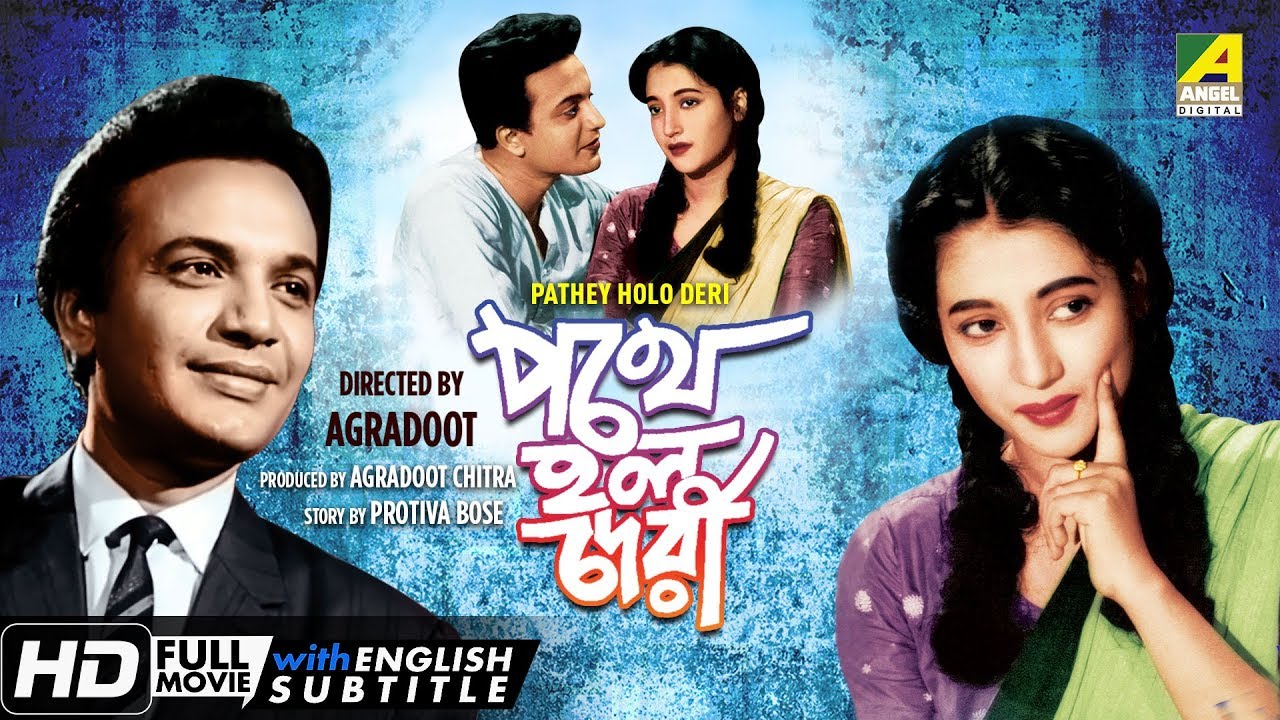


 Uttam Kumar in the 50s and 60s acted opposite different actresses, some who were beautiful, like Sumitra Debi, Suchitra Sen, Sharmila Tagore, etc., while others who had wide ranging acting conceptions like Manju Dey, Sabitri Chatterji and others. Arundhuti Debi was one of the highly educated characters whose qualifications were expressed in the characters she had played in a long career spanning over 25 years.
With Uttam Kumar Arundhuti Debi acted in approximately 8 films including Bokul, Shiulibari, Jhinder Bandi, Jotugriha, Nabajanma, Manmayi Girls School, Pushpodhonu and Bicharak. While in Bicharak, she expressed the feelings of a confused sister whose elder sister was married to Uttam Kumar. Uttam Kumar was attracted to Arundhuti Debi and when fire broke out in the house and his first wife Deepti Ray required his help, he declined to help her and allowed her to die. A similar type of case was adjudicated by Uttam Kumar when he was a judge, when Chabi Biswas, the Public Prosecutor talked about the liability of the accused who could have saved the life of his brother, but he did not do so. Uttam Kumar was asked by Arundhuti Debi to examine his own conscience about his liability towards Deepti Roy in Prabhat Mukherjee’s classic film.
Arundhuti Debi and Uttam Kumar showed their comedy conception in the film Manmayi Girl’s School, where they had to pretend to be spouses, because their landlord rented his house to them only on the condition of marriage. But their playacting resulted in an affair with one another. In Pushpadhanu, Arundhuti Debi brought up her husband’s child after he deserted her and got attached with Uttam Kumar who understood the feelings of an established dancer who got recognition but was a loner.
Jhinder Bandi was made with the historical touch of Prisoner of Zenda and Tapan Sinha astonished the viewers with his treatment in the Indian context. The royal style of living of Rajputs was well demonstrated by both Uttam Kumar and Arundhuti Debi. Shiulibari was directed by Pijus Bose, who utilized the talent of Uttam Kumar and Arundhuti in a story based on the life of villagers of West Bengal.
Jotugriha, directed by Tapan Sinha, was probably the most successful film of Uttam Kumar and Arundhuti Debi. In that film lack of begetting a child led to disharmony of the married couple. Both Uttam Kumar and Arundhuti Debi got separated and even after separation never lost the respect of each other. The story ends with both the spouses travelling in to trains which crossed each other. The level of performance of both Uttam Kumar and Arundhuti Debi, was such that there were no Indian actor or actress who could match the standard of performance.
Uttam Kumar was the greatest superstar of Bengali cinema and became one-man industry in the 70s. Critics argue that no Indian star other than Dilip Kumar and Raj Kapoor had the individual charishma which Uttam Kumar had and if his Hindi films clicked he could have created serious competition for the stars of 60s. But Arundhuti Debi’s films with Uttam Kumar were so rich in literature, script and performance that critics argue that the combination addressed the concerns of intellectual audience of the country more than any other combination. The films should be restored for their aesthetic value.
Uttam Kumar in the 50s and 60s acted opposite different actresses, some who were beautiful, like Sumitra Debi, Suchitra Sen, Sharmila Tagore, etc., while others who had wide ranging acting conceptions like Manju Dey, Sabitri Chatterji and others. Arundhuti Debi was one of the highly educated characters whose qualifications were expressed in the characters she had played in a long career spanning over 25 years.
With Uttam Kumar Arundhuti Debi acted in approximately 8 films including Bokul, Shiulibari, Jhinder Bandi, Jotugriha, Nabajanma, Manmayi Girls School, Pushpodhonu and Bicharak. While in Bicharak, she expressed the feelings of a confused sister whose elder sister was married to Uttam Kumar. Uttam Kumar was attracted to Arundhuti Debi and when fire broke out in the house and his first wife Deepti Ray required his help, he declined to help her and allowed her to die. A similar type of case was adjudicated by Uttam Kumar when he was a judge, when Chabi Biswas, the Public Prosecutor talked about the liability of the accused who could have saved the life of his brother, but he did not do so. Uttam Kumar was asked by Arundhuti Debi to examine his own conscience about his liability towards Deepti Roy in Prabhat Mukherjee’s classic film.
Arundhuti Debi and Uttam Kumar showed their comedy conception in the film Manmayi Girl’s School, where they had to pretend to be spouses, because their landlord rented his house to them only on the condition of marriage. But their playacting resulted in an affair with one another. In Pushpadhanu, Arundhuti Debi brought up her husband’s child after he deserted her and got attached with Uttam Kumar who understood the feelings of an established dancer who got recognition but was a loner.
Jhinder Bandi was made with the historical touch of Prisoner of Zenda and Tapan Sinha astonished the viewers with his treatment in the Indian context. The royal style of living of Rajputs was well demonstrated by both Uttam Kumar and Arundhuti Debi. Shiulibari was directed by Pijus Bose, who utilized the talent of Uttam Kumar and Arundhuti in a story based on the life of villagers of West Bengal.
Jotugriha, directed by Tapan Sinha, was probably the most successful film of Uttam Kumar and Arundhuti Debi. In that film lack of begetting a child led to disharmony of the married couple. Both Uttam Kumar and Arundhuti Debi got separated and even after separation never lost the respect of each other. The story ends with both the spouses travelling in to trains which crossed each other. The level of performance of both Uttam Kumar and Arundhuti Debi, was such that there were no Indian actor or actress who could match the standard of performance.
Uttam Kumar was the greatest superstar of Bengali cinema and became one-man industry in the 70s. Critics argue that no Indian star other than Dilip Kumar and Raj Kapoor had the individual charishma which Uttam Kumar had and if his Hindi films clicked he could have created serious competition for the stars of 60s. But Arundhuti Debi’s films with Uttam Kumar were so rich in literature, script and performance that critics argue that the combination addressed the concerns of intellectual audience of the country more than any other combination. The films should be restored for their aesthetic value.


